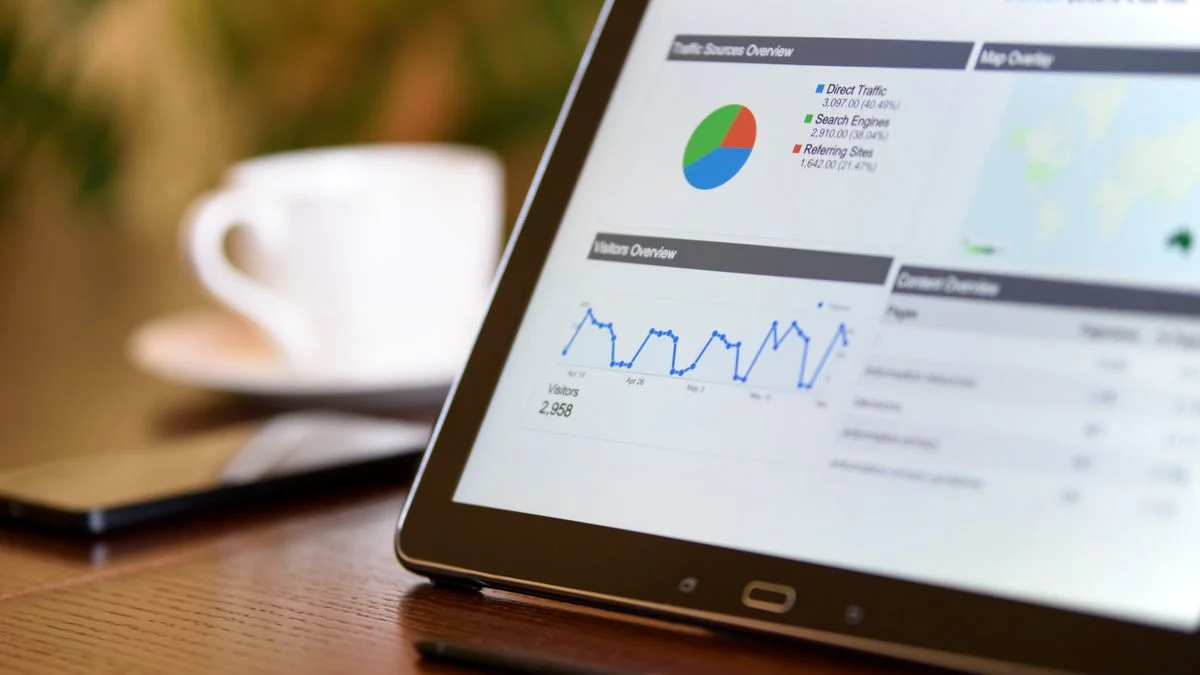
Quick answer: KPI stands for key performance indicator. It is a measurable number that shows how well a person, team or company is moving toward an important goal.
Breaking Down the Words
“Key” means important. “Performance” refers to how well something is working. “Indicator” is a signal or measurement. Put together, a KPI is an important number that signals whether you are on track. It is not just any statistic; it connects directly to a goal.
Examples of KPIs
- Sales: monthly revenue, number of new customers, average order value.
- Marketing: website visitors, conversion rate, cost per lead.
- Customer service: response time, satisfaction score, resolved tickets.
- Finance: profit margin, cash flow, return on investment.
- People: staff turnover, training hours, employee satisfaction.
KPI vs Metric
A metric is any measurement, such as the number of page views. A KPI is a metric that is tied to a goal. Page views may be a simple metric, but if your goal is growing readership, monthly returning readers could be a true KPI.
How to Choose Good KPIs
- Start with the goal. What do you want to achieve?
- Make it measurable. You need a number and a way to track it.
- Set a target and a deadline. For example, increase newsletter sign-ups by 20 percent in three months.
- Keep the list short. Five or six well-chosen KPIs beat thirty confusing ones.
- Review regularly. Goals change, and KPIs should change with them.
Leading and Lagging KPIs
A lagging KPI reports on results already achieved, such as last quarter’s revenue. A leading KPI predicts future results, such as the number of sales meetings booked this week. A healthy dashboard has both.
Common Mistakes
- Tracking too many numbers.
- Choosing figures that look good but do not matter.
- Forgetting to share results with the team.
Final Thoughts
KPIs turn vague ambitions into clear targets. Pick a few that truly reflect your goals, check them often, and use them to decide what to do next rather than simply to report the past.