The Evolution of Green Marketing in the Modern Era
Marketing strategies have undergone a radical transformation over the last decade. While traditional advertising once focused solely on product benefits and price points, contemporary consumers now demand alignment between their personal values and the brands they support. This shift has placed environmental stewardship at the forefront of corporate identity. Companies that fail to adapt to this green revolution risk becoming obsolete in the eyes of a conscious demographic.
The rise of the eco friendly movement is not merely a passing trend but a fundamental shift in global commerce. Businesses are now looking for tangible ways to demonstrate their commitment to the planet without sacrificing the efficacy of their promotional efforts. This is where high quality promotional items become essential tools for communication. By choosing materials that reflect a commitment to sustainability, a brand sends a silent but powerful message about its corporate ethics.
Understanding the Botany and Biology of Jute Fiber
To appreciate why jute is such a powerhouse in the world of sustainable style, one must look at the plant itself. Jute is a long, soft, shiny vegetable fiber that can be spun into coarse, strong threads. It is primarily grown in the Bengal Delta, spanning parts of India and Bangladesh. Often referred to as the golden fiber due to its color and high cash value, jute is one of the most affordable natural fibers available.
The environmental credentials of jute are impressive from a biological standpoint. It is a rain fed crop that requires little to no fertilizer or pesticides to thrive. Furthermore, jute plants reach maturity in just four to six months, making them a rapidly renewable resource. During their growth cycle, these plants absorb high levels of carbon dioxide and release oxygen at a rate significantly higher than many trees. When the fiber is eventually discarded, it is completely biodegradable and compostable, returning nutrients to the soil rather than lingering in a landfill for centuries.
The Carbon Footprint of Production
When compared to synthetic materials like polyester or even natural fibers like conventional cotton, jute has a significantly lower carbon footprint. The processing of jute involves retting, a natural water based process that separates the fibers from the stem. This avoids the heavy chemical usage often associated with textile manufacturing. For businesses working with Totally Branded to source their promotional materials, understanding these biological advantages helps in crafting a compelling brand narrative focused on genuine sustainability.
Why Branded Jute Bags Outperform Plastic and Cotton
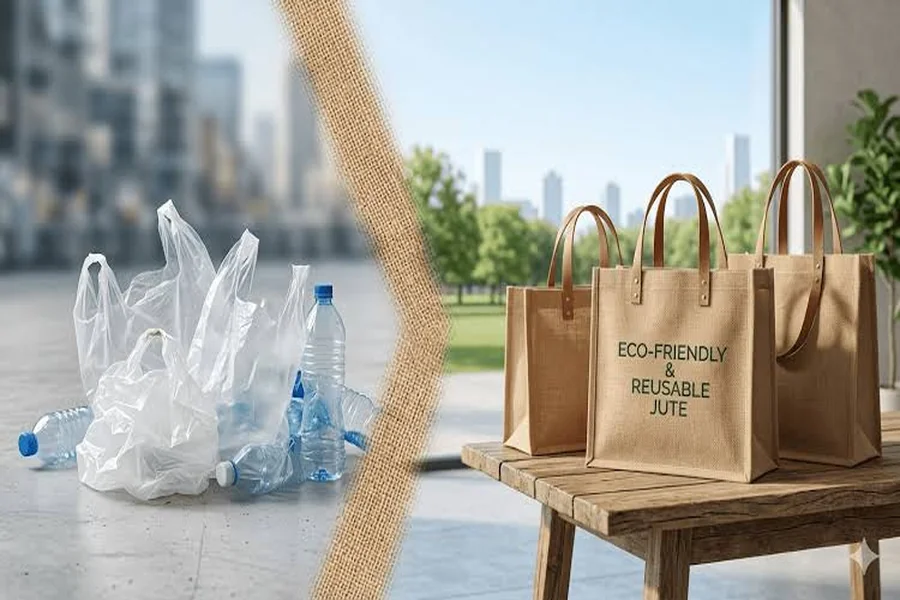
The debate over the best reusable bag often centers on durability and environmental impact. Plastic bags are notorious for their devastating impact on marine life and their thousand year decomposition timeline. While cotton bags are a popular alternative, the water intensity required to produce cotton is substantial. Jute occupies a unique middle ground, offering superior strength and a lower environmental cost.
- Structural Integrity: Jute fibers are incredibly resilient, allowing these bags to carry heavy loads without tearing or stretching.
- Aesthetic Appeal: The rustic, textured look of jute provides a premium feel that plastic can never replicate.
- Longevity: A single jute bag can replace hundreds of single use plastic bags over its lifetime.
- Thermal Properties: Jute has natural insulating properties, making it excellent for carrying groceries or chilled items.
When a company invests in Branded Jute Bags through a provider like Totally Branded, they are choosing a product that will remain in the consumer’s hands for years rather than minutes. This longevity is the key to eco friendly marketing success.
The Strategic Psychology of Long Term Brand Exposure
Promotional marketing is a game of impressions. The goal is to keep a brand name in front of a potential customer for as long as possible. Unlike a digital ad that disappears with a scroll or a flyer that ends up in the bin, a high quality jute bag becomes a functional part of a person’s daily life. It travels to the supermarket, the gym, the beach, and the office.
This repeated exposure creates a psychological phenomenon known as the mere exposure effect. The more a person sees a brand logo in a positive, functional context, the more they develop a preference for that brand. Because jute bags are perceived as valuable items rather than cheap giveaways, they are kept and used frequently. This transforms every customer into a walking billboard, extending the reach of the initial marketing investment far beyond the original recipient.
Customization Techniques for Professional Brand Identity
A common misconception is that sustainable materials limit design creativity. In reality, the coarse weave of jute provides a unique canvas for sophisticated branding. Modern printing techniques have evolved to ensure that logos and slogans remain crisp and vibrant even on textured surfaces.
Screen Printing and Transfer Options
- Silk Screen Printing: This is ideal for bold, solid colors and simple logos, providing a thick layer of ink that stands out against the natural fiber.
- Heat Transfers: For more complex designs or photographic elements, heat transfers allow for a wider range of colors and finer details.
- Embroidery: For a truly premium feel, embroidery adds texture and a sense of luxury to the bag, making it a highly coveted item.
When selecting customization options, it is important to work with experts who understand how different inks interact with natural fibers. Working with a dedicated partner like Totally Branded ensures that the final product aligns perfectly with the brand’s visual identity guidelines while maintaining the bag’s eco friendly appeal.
Economic Advantages of Choosing Sustainable Promotional Goods
While the initial unit cost of a jute bag may be higher than a flimsy plastic or thin non woven alternative, the return on investment is significantly greater. Marketing managers must look at the cost per impression. If a bag costs three dollars but is used two hundred times over two years, the cost per exposure is less than two cents.
Furthermore, there is a hidden economic benefit in brand equity. In a market where consumers are willing to pay a premium for sustainable products, being associated with green initiatives increases the perceived value of the company. This can lead to higher customer loyalty and a lower churn rate. Businesses that order their supplies from Totally Branded often find that the durability of the products reduces the need for frequent reordering of cheaper, less effective promotional items.
Social Responsibility and the Ethical Supply Chain
Sustainability is not just about the environment; it is also about the people involved in the production process. The jute industry supports millions of small scale farmers and workers in developing nations. By choosing jute, brands contribute to a global economy that values natural resources and fair labor practices.
Ethical sourcing is a major talking point in modern PR. Companies can confidently share the story of their jute bags, from the fields of Bengal to the hands of their customers. This transparency builds trust. When a brand can prove that its promotional merchandise was produced under fair conditions and without harming the ecosystem, it gains a competitive edge that cannot be bought through traditional advertising.
Integrating Jute Bags into a Multichannel Marketing Strategy
Branded jute bags should not exist in a vacuum. They are most effective when integrated into a broader marketing campaign. For example, a company could launch a social media contest where followers share photos of their jute bags in unique locations using a specific hashtag. This bridges the gap between physical merchandise and digital engagement.
Practical Applications for Maximum Reach
- Event Swag: Use jute bags as the container for other promotional materials at trade shows, ensuring the bag itself is the most kept item.
- Employee Onboarding: Include a branded bag in welcome kits for new hires to foster a sense of belonging and promote company values from day one.
- Retail Packaging: Replace paper or plastic shopping bags with reusable jute versions, perhaps offering a small discount to customers who bring them back for future purchases.
- Corporate Gifting: Fill a high end jute bag with local artisanal products for a thoughtful and sustainable holiday gift.
Maximizing Impact Through Thoughtful Design and Utility
The most successful branded bags are those designed with the end user in mind. If a bag is too small, it won’t be used for grocery shopping. If the handles are too short, it can’t be carried comfortably over the shoulder. When designing a bag, consider the daily habits of your target audience.
Adding features like a waterproof lining or an internal pocket for a phone and keys can significantly increase the frequency of use. A bag that solves a problem for the consumer is a bag that will be cherished. By focusing on utility, a company ensures that its logo is present during the customer’s most productive and active moments. Professional sourcing through Totally Branded allows for these specific customizations that elevate a simple bag into a daily essential.
The Future of Sustainable Brand Engagement
As we look toward the future, the importance of biodegradable and renewable materials will only grow. Legislative changes across the globe are already banning single use plastics, forcing businesses to find long term alternatives. Jute stands as a time tested solution that meets modern environmental standards.
The brands that will win in the coming decade are those that view sustainability not as a hurdle, but as an opportunity to connect more deeply with their audience. Branded jute bags are a perfect physical manifestation of this philosophy. They are practical, beautiful, and deeply respectful of the planet’s resources. By making the switch to these eco friendly marketing winners, businesses can ensure their message is carried forward into a cleaner, greener future.