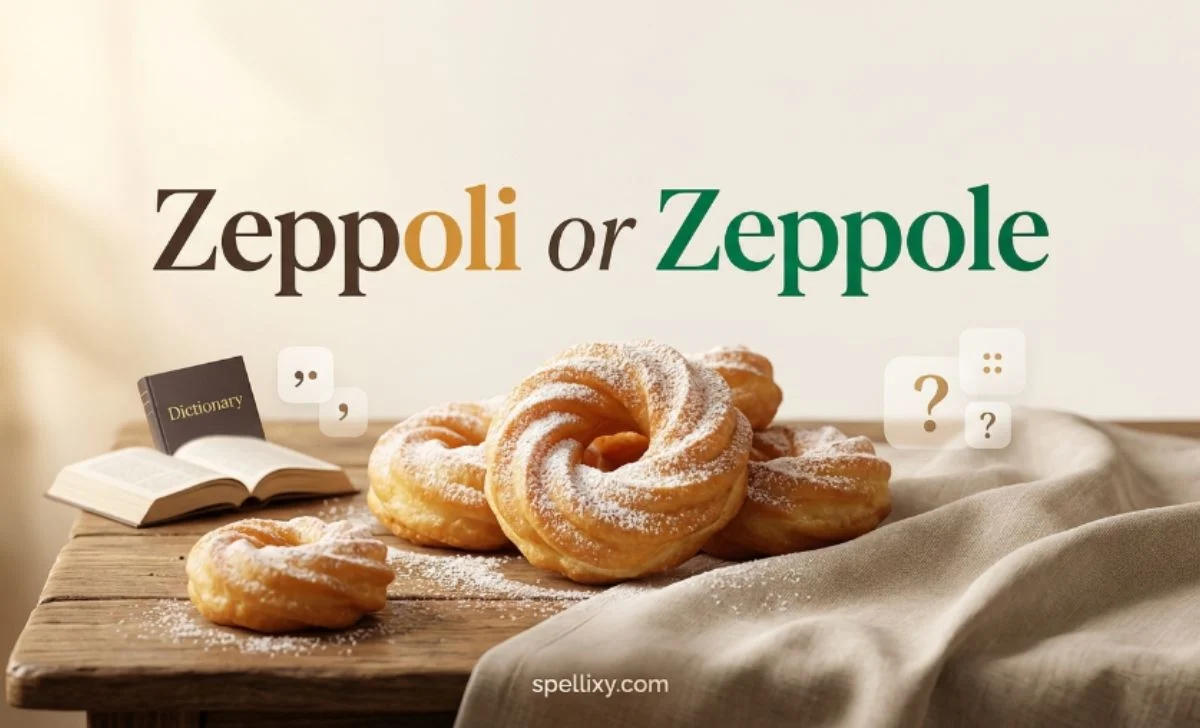
Picture yourself walking into an Italian bakery. The smell of fresh fried dough fills the air, and someone points to a tray of golden pastries.
One person calls them zeppoli, while another confidently says zeppole. So, which one is correct? This small spelling difference confuses thousands of people every month, especially when searching for recipes, Italian desserts, or restaurant menus.
The short answer is that zeppole is the correct Italian spelling, while zeppoli is usually a misspelling or regional misunderstanding.
In this guide, you’ll discover the correct spelling, pronunciation, meaning, history, and why this confusion happens, along with helpful examples that make the difference easy to remember.
Zeppoli or Zeppole – Quick Answer
If you’re wondering whether zeppoli or zeppole is correct, the answer is simple:
Zeppole is the correct Italian word. Zeppoli is generally considered a misspelling and is not the standard term in Italian.
In Italy, zeppole refers to a popular fried or baked pastry often filled with custard, ricotta, or cream and dusted with powdered sugar.
The dessert is especially popular during Saint Joseph’s Day, although many bakeries sell it throughout the year.
Many English speakers type zeppoli because the pronunciation can make the ending sound similar to -li, especially in some Italian-American accents. However, dictionaries, Italian cookbooks, and authentic recipes consistently use zeppole.
Correct Example
- We ordered fresh zeppole for dessert after dinner.
- My grandmother makes homemade zeppole every Saint Joseph’s Day.
- The bakery serves warm Zeppole with powdered sugar.
Incorrect Example
- We bought fresh zeppoli from the bakery.
- My favorite Italian dessert is zeppoli.
Quick Tip: If you’re writing about the famous Italian pastry, always choose zeppole.
Is It Zeppole or Zeppoli?
Many people first encounter this dessert through restaurant menus, food blogs, or social media. Since the word is Italian, its spelling can seem unfamiliar to English speakers.
The correct spelling is:
| Word | Correct? | Notes |
|---|---|---|
| Zeppole | ✅ Yes | Standard Italian spelling |
| Zeppoli | ❌ No | Common misspelling in English searches |
Although zeppoli appears in online searches, recipe forums, and even some restaurant menus, it isn’t the accepted Italian spelling.
Search engines recognize this confusion, which is why many people search for “zeppoli or zeppole.”
The confusion becomes even stronger because people often hear the word spoken before they ever see it written.
When pronounced quickly, the ending may sound like “lee”, leading many people to assume the word ends in -li instead of -le.
What Does Zeppole Mean?
The word Zeppole refers to a traditional Italian pastry made from soft dough that is usually fried until golden brown. Depending on the region, it may also be baked instead of fried.
Some varieties are served plain with powdered sugar, while others contain delicious fillings such as:
- Pastry cream
- Custard
- Ricotta
- Chocolate cream
- Jam
In different parts of Italy, recipes vary slightly, but the name zeppole remains the same.
Common Meanings
The word zeppole may refer to:
- A traditional Italian fried pastry
- A festive dessert served during Saint Joseph’s Day
- A bakery treat topped with powdered sugar
- A filled pastry made with cream or ricotta
Although recipes change from one region to another, the identity of the dessert remains closely connected to Italian culinary tradition.
Simple Usage Examples
Here are a few natural examples:
- We shared a plate of warm zeppole after dinner.
- Fresh zeppole taste best when served warm.
- The bakery prepares homemade zeppole every weekend.
- My family enjoys zeppole during spring celebrations.
These examples show how the word is commonly used in everyday English while keeping its original Italian spelling.
What’s the Correct Way to Say Zeppole?
Many people can recognize the dessert but aren’t sure how to pronounce its name.
zeppole (TSEP-poh-leh)
In Italian, the word is spoken smoothly with three syllables. The final “e” is pronounced, unlike many English words where the last letter is silent.
Because of regional Italian-American accents, some speakers pronounce it differently, which partly explains why people mistakenly write zeppoli.
A simple way to remember it is this:
- Ends with “le” in spelling
- Ends with an “eh” sound in pronunciation
Once you connect the spelling with the pronunciation, it’s much easier to remember the correct form.
The Italian Story Behind Zeppole
The history of Zeppole stretches back hundreds of years and reflects the rich traditions of southern Italy.
While several regions claim to have created the pastry, most historians associate its modern form with Naples and the surrounding Campania region.
Originally, zeppole were simple balls or rings of dough fried in oil and lightly sweetened. Over time, Italian pastry chefs introduced elegant versions filled with pastry cream, custard, or ricotta, making them a beloved dessert for celebrations and religious festivals.
Today, you’ll find different regional styles across Italy. Some are crisp on the outside and airy inside, while others are baked using choux pastry and topped with cherries or cream.
Despite these variations, one thing never changes, the authentic name remains zeppole, not zeppoli.
Word History
The exact linguistic origin of the word is still debated by language experts, but most agree that it developed within southern Italian dialects before becoming part of standard Italian culinary vocabulary.
Historical records show that zeppole has been associated with family celebrations, local bakeries, and religious feasts for generations.
As Italian immigrants settled in countries like the United States, they brought both the recipe and the tradition with them, helping the pastry become popular around the world.
Regional Zeppole: How Recipes Change Across Italy
One of the reasons Zeppole has remained popular for centuries is its incredible regional variety. While the pastry is recognized throughout Italy, each region has developed its own recipe based on local ingredients, traditions, and family customs.
In some areas, zeppole are sweet, light, and filled with pastry cream. In others, they are savory, made with potatoes, cheese, or even anchovies.
These regional differences are not mistakes, they are part of what makes Italian cuisine so rich and diverse.
Whether you visit Naples, Sicily, or Calabria, you’ll discover that every bakery has its own version while still preserving the authentic spirit of traditional zeppole.
Calabrese Zeppole with Potatoes
Among Italy’s many regional specialties, Calabrese zeppole are one of the most distinctive. Unlike the sweet pastries many travelers expect, these zeppole often include mashed potatoes in the dough, giving them an exceptionally soft and fluffy texture.
The potatoes help retain moisture while creating a light interior and a crispy golden crust after frying. This simple addition has made Calabrese zeppole a favorite comfort food for generations.
Traditional Ingredients
Most homemade Calabrese recipes include:
- Mashed potatoes
- All-purpose flour
- Yeast
- Warm water
- Salt
- Extra virgin olive oil
- Vegetable oil for frying
Depending on the family recipe, cooks may also add:
- Grated cheese
- Fresh parsley
- Rosemary
- Anchovies
- Black olives
Because many recipes have been passed down through families for decades, no two versions are exactly alike.
Why Are Potatoes Added?
Adding potatoes isn’t just about flavor. They also:
- Create a softer texture
- Keep the dough moist
- Help the pastry stay fresh longer
- Produce a lighter interior after frying
This is why many Italian families continue to use potatoes even today.
Zeppole with Anchovies: A Traditional Savory Variation
Outside Italy, many people assume zeppole are always sweet. In reality, several southern Italian regions prepare delicious savory versions that are just as traditional.
One of the oldest recipes features anchovies hidden inside the dough before frying.
As the pastry cooks, the anchovy melts slightly, adding a rich, salty flavor that perfectly balances the light dough.
Although this combination may seem unusual to first-time visitors, it has been enjoyed in Italy for generations.
Sweet vs. Savory Zeppole
| Sweet Zeppole | Savory Zeppole |
|---|---|
| Powdered sugar | Anchovies |
| Pastry cream | Cheese |
| Custard | Potatoes |
| Ricotta filling | Fresh herbs |
| Chocolate filling | Olives |
Neither version is more authentic than the other. The choice depends on local traditions, family recipes, and the occasion.
When Are Savory Zeppole Served?
Savory zeppole commonly appear during:
- Family gatherings
- Religious festivals
- Local food celebrations
- Holiday meals
- Community feasts
Many Italian households prepare both sweet and savory versions on the same day so guests can enjoy a variety of flavors.
Lidia’s Zeppole Recipe: Why Home Cooks Love It
Many people search for Lidia’s zeppole recipe because it stays true to traditional Italian cooking while remaining easy for home bakers.
Instead of relying on complicated techniques, the recipe emphasizes careful preparation and high-quality ingredients.
What Makes It Different?
Lidia’s approach focuses on:
- Fresh ingredients
- Proper dough consistency
- Accurate frying temperature
- Light, airy texture
- Balanced sweetness
Rather than covering the pastry with excessive toppings, the recipe allows the dough itself to become the star of the dessert.
This reflects a core principle of Italian cuisine: simple ingredients prepared with care often produce the best results.
Homemade Sicilian Zeppole: Grandma’s Traditional Method
Across Sicily, family recipes for zeppole have been handed down from one generation to the next. Every grandmother has her own technique, but the goal is always the same, creating pastries that are soft inside, crisp outside, and full of flavor.
Most homemade Sicilian recipes use basic pantry staples such as flour, yeast, water, salt, and olive oil.
After the dough rises, it is shaped by hand and fried until golden. Once cooked, the pastries are dusted generously with powdered sugar or filled with rich pastry cream.
The beauty of this traditional method lies in its simplicity. Instead of depending on expensive ingredients, it relies on patience, fresh dough, and careful frying.
That is why many people still consider homemade Sicilian zeppole to be the gold standard of Italian comfort food.
Key Takeaway
Although the ingredients and fillings vary from one region to another, every authentic version shares the same identity: the correct name is zeppole, not zeppoli.
Whether you enjoy the sweet Neapolitan style, the potato-based Calabrese version, or the savory anchovy-filled recipe, each reflects Italy’s rich culinary heritage and the traditions that have kept this beloved pastry alive for centuries.
Zeppole vs. Beignets: What’s the Difference?
At first glance, Zeppole and Beignet look very similar. Both are golden, fried pastries that are often dusted with powdered sugar.
Because of these similarities, many people assume they are the same dessert. However, they come from different culinary traditions and have unique flavors, textures, and serving styles.
Zeppole originated in Italy, where they are closely connected to family celebrations and Saint Joseph’s Day.
Beignets, on the other hand, have French roots and later became famous in New Orleans, where they are commonly served with coffee.
Key Differences
| Feature | Zeppole | Beignets |
|---|---|---|
| Country of origin | Italy | France |
| Traditional shape | Balls or rings | Squares |
| Texture | Light and airy | Soft and pillowy |
| Filling | Often filled with pastry cream or ricotta | Usually served plain |
| Traditional occasion | St. Joseph’s Day | Breakfast or café dessert |
Which One Should You Try?
If you enjoy creamy Italian pastries, zeppole are an excellent choice. If you prefer a soft pastry served with plenty of powdered sugar, you may enjoy beignets.
Both desserts are delicious, but each represents a different culinary tradition.
Zeppole vs. Doughnuts
Another common question is whether zeppole are simply Italian doughnuts.
The answer is not exactly.
Although both desserts are made from fried dough, their ingredients, preparation, and cultural significance are quite different.
Comparison Table
| Zeppole | Doughnuts |
|---|---|
| Traditional Italian pastry | Popular worldwide snack |
| Often homemade | Commonly sold year-round |
| Can be sweet or savory | Mostly sweet |
| Frequently served during festivals | Everyday bakery item |
| Filled with custard, ricotta, or cream | Wide variety of fillings and glazes |
Unlike many commercial doughnuts, authentic zeppole are closely tied to Italian family traditions and religious celebrations.
Their lighter texture and regional variations make them unique rather than simply another type of doughnut.
Why Do Italians Eat Zeppole?
For Italians, zeppole are much more than a sweet treat. They symbolize tradition, family, and celebration.
For centuries, families have gathered to prepare fresh zeppole at home, passing treasured recipes from grandparents to children.
Making the dough, frying the pastries, and decorating them with pastry cream or powdered sugar has become an important family activity in many households.
Today, bakeries across Italy continue this tradition, especially during major religious festivals.
More Than Just Dessert
People enjoy zeppole because they represent:
- Family traditions
- Religious celebrations
- Regional pride
- Homemade cooking
- Italian cultural heritage
This emotional connection is one reason the pastry remains popular both in Italy and among Italian communities around the world.
Why Are Zeppole Associated with St. Joseph’s Day?
One of the strongest traditions linked to Zeppole is Saint Joseph’s Day, celebrated each year on March 19.
According to tradition, communities prepared special foods to honor Saint Joseph after a period of hardship and famine. Over time, zeppole became the dessert most closely connected with this celebration.
Today, many Italian bakeries prepare thousands of fresh zeppole for the occasion. Some are topped with pastry cream and an Amarena cherry, while others are dusted with powdered sugar or filled with rich custard.
Although recipes differ by region, the tradition remains the same: sharing zeppole with family and friends is a joyful way to celebrate the day.
Italy’s Most Famous Desserts
Italy is known for some of the world’s most beloved desserts. While zeppole are among the most popular festive pastries, they share the spotlight with several other classics.
| Italian Dessert | Why It’s Famous |
|---|---|
| Tiramisu | Layers of coffee-soaked biscuits and mascarpone cream |
| Cannoli | Crispy pastry shells filled with sweet ricotta |
| Zeppole | Traditional fried pastry served during celebrations |
| Sfogliatella | Flaky pastry with a rich filling |
| Panna cotta | Smooth, creamy dessert served chilled |
Each dessert reflects the unique traditions of a different Italian region, making Italian cuisine one of the most diverse in the world.
What Is the Most Popular Italian Pastry?
Choosing a single “most popular” Italian pastry is difficult because every region has its own specialties. However, these pastries consistently rank among the country’s favorites:
- Cannoli
- Sfogliatella
- Zeppole
- Bombolone
- Cornetto
Among these, zeppole stand out because they combine delicious flavor with deep cultural and religious significance.
Why Zeppole Continue to Delight Food Lovers
Authentic zeppole have remained popular for generations because they offer much more than great taste.
Their simple ingredients, regional diversity, and rich history make them a dessert that people return to again and again.
Whether served warm with powdered sugar, filled with silky pastry cream, or prepared as a savory specialty with potatoes or anchovies, zeppole showcase the creativity of Italian cooking.
Every bite tells a story of family traditions, local culture, and recipes that have been passed down through generations.
Quick Facts About Zeppole
| Question | Answer |
|---|---|
| Correct spelling | Zeppole |
| Singular form | Zeppola |
| Common misspelling | Zeppoli |
| Country of origin | Italy |
| Famous region | Campania |
| Traditional holiday | Saint Joseph’s Day |
| Sweet or savory? | Both |
| Fried or baked? | Both methods are traditional |
What Is “Zeppoli” at Olive Garden?
Many people first hear the word “zeppoli” after dining at Olive Garden. Seeing this spelling on a restaurant menu often leads customers to believe it is the authentic Italian name. In reality, the traditional Italian word is Zeppole.
Olive Garden’s dessert is inspired by the classic Italian fried pastry but is adapted for an American audience.
The warm dough is lightly fried, coated with powdered sugar, and served with rich dipping sauces such as chocolate. While it delivers a delicious dessert experience, the menu spelling has also contributed to the widespread confusion between zeppole and zeppoli.
If you’re writing about authentic Italian cuisine, recipes, or food history, zeppole is always the preferred spelling.
Why Does the Confusion Continue?
Several factors explain why many people search for “zeppoli or zeppole” after visiting Olive Garden.
- Restaurant menu spelling
- Social media posts
- Food blogs copying the same spelling
- Search engine autocomplete
- Word-of-mouth pronunciation
These factors make zeppoli appear more common than it actually is, even though zeppole remains the correct Italian term.
Quick Comparison
| Term | Meaning | Recommended Usage |
|---|---|---|
| Zeppole | Authentic Italian pastry | ✅ Yes |
| Zeppoli | Restaurant spelling or common misspelling | ❌ No |
What Pastries Do They Eat in The Sopranos?
Food plays an important role throughout The Sopranos. Family dinners, bakeries, and neighborhood cafés frequently showcase classic Italian-American cuisine, including several well-known pastries.
Although Cannoli is the dessert most viewers remember, the series also references or features traditional favorites such as:
- Cannoli
- Sfogliatella
- Zeppole
- Biscotti
- Italian-style lobster tail pastries
These desserts help reflect the family’s Italian heritage and demonstrate how closely food is tied to family, celebration, and identity.
Why Are Italian Pastries So Common in the Show?
The characters belong to Italian-American families whose traditions include gathering around homemade meals and bakery desserts. Showing authentic pastries adds realism while celebrating Italian culinary culture.
As a result, many viewers discover classic desserts like zeppole through the series and later search online to learn more about them.
Why Is Fagioli Pronounced “Fazool”?
Another question often searched alongside zeppole is why fagioli is sometimes pronounced “fazool.”
The explanation lies in the history of Italian immigration to the United States. Many immigrants came from southern Italy, where regional dialects influenced pronunciation.
As families settled in America, these pronunciations evolved even further through everyday English speech.
Over time, some familiar Italian words changed noticeably in Italian-American communities.
Examples of Italian-American Pronunciation
| Standard Italian | Italian-American Pronunciation |
|---|---|
| Fagioli | Fazool |
| Mozzarella | Mutzarella |
| Ricotta | Rigot |
| Capicola | Gabagool |
| Prosciutto | Proshoot |
These pronunciations are part of Italian-American cultural history rather than standard modern Italian.
Understanding this difference also explains why words like zeppole are sometimes spelled incorrectly after being heard instead of read.
Expert Tips for Making Perfect Zeppole at Home
Whether you’re following a traditional family recipe or trying homemade zeppole for the first time, a few simple techniques can greatly improve the final result.
1. Use Fresh Ingredients
Fresh flour, eggs, yeast, butter, and high-quality oil produce better flavor and texture than older ingredients.
2. Let the Dough Rise Properly
If the recipe uses yeast, allow enough time for the dough to rise. Proper fermentation creates lighter, softer pastries.
3. Keep the Oil at the Right Temperature
Oil that is too hot burns the outside while leaving the inside undercooked. Oil that is too cool causes the dough to absorb excess oil.
For best results, maintain a steady frying temperature throughout cooking.
4. Fry in Small Batches
Adding too many pastries at once lowers the oil temperature, leading to uneven cooking.
Small batches produce crisp, evenly browned zeppole every time.
5. Fill After Frying
If you’re making cream-filled zeppole, wait until the pastries have cooled slightly before adding the filling. This keeps the pastry crisp while preventing the cream from melting.
6. Serve Immediately
Freshly fried zeppole are at their best when served warm with:
- Powdered sugar
- Pastry cream
- Chocolate sauce
- Honey
- Fresh fruit preserves
Common Mistakes to Avoid
Even experienced home bakers occasionally make mistakes when preparing zeppole.
Avoid these common problems:
- Using expired yeast
- Adding too much flour
- Frying at inconsistent temperatures
- Overcrowding the frying pan
- Filling pastries while they’re too hot
- Letting finished zeppole sit for several hours before serving
Correcting these small mistakes can dramatically improve both texture and flavor.
Google Trends & Why People Search “Zeppoli or Zeppole”
Searches for “zeppoli or zeppole” continue to grow because users encounter both spellings across restaurant menus, recipe websites, food blogs, and social media.
Most people searching this keyword want answers to one of these questions:
- Which spelling is correct?
- How do you pronounce zeppole?
- Is zeppoli a real Italian word?
- What’s the difference between zeppola and zeppole?
- How do you make authentic Italian zeppole?
- Why are zeppole eaten on St. Joseph’s Day?
Countries with Strong Search Interest
| Country | Popular Search Intent |
|---|---|
| United States | Recipes, spelling, pronunciation |
| Canada | Authentic Italian desserts |
| United Kingdom | Meaning and usage |
| Australia | Homemade recipes |
| India | Food guides and pronunciation |
Featured Snippet: The Final Answer
If you’re still asking “Is it zeppoli or zeppole?”, the answer is simple:
- Zeppole is the correct Italian spelling.
- Zeppola refers to one pastry.
- Zeppole refers to multiple pastries.
- Zeppoli is generally a misspelling or a restaurant-specific variation rather than the authentic Italian word.
Using the correct spelling not only improves your writing but also reflects the rich culinary traditions behind one of Italy’s most beloved pastries.
FAQs
1. Is it zeppole or zeppoli?
Zeppole is the correct Italian spelling. Zeppoli is generally considered a common misspelling that appears on some menus and online searches.
2. Is it zeppole or zeppola?
Zeppola refers to one pastry, while zeppole is the plural form used for two or more pastries.
3. What does the word zeppole mean?
Zeppole are traditional Italian fried or baked pastries that are often dusted with powdered sugar or filled with pastry cream, custard, or ricotta.
4. What is the meaning of Zeppoli?
Zeppoli has no separate meaning in Italian. It is simply a common misspelling or alternate menu spelling of zeppole.
5. What’s the correct way to say zeppole?
The traditional Italian pronunciation is tseh-POH-leh, with the final “e” clearly pronounced.
6. How do you pronounce the Italian pastry zeppole?
It is pronounced tseh-POH-leh, using three syllables in standard Italian.
7. Is “zeppoli” a real Italian word?
No. Standard Italian dictionaries and authentic recipes use zeppole, not zeppoli.
8. Why do people spell zeppole as zeppoli?
The confusion usually comes from pronunciation, regional accents, restaurant menus, and repeated spelling mistakes online.
9. Which spelling is correct: zeppole or zeppoli?
Zeppole is the correct and widely accepted Italian spelling.
10. Is zeppole singular or plural?
Zeppole is the plural form. The singular form is zeppola.
11. Is the plural of zeppole “zeppoles”?
No. Since zeppole is already plural in Italian, adding -s is unnecessary.
12. What is the singular form of zeppole?
The singular form is zeppola.
13. What is Zeppoli at Olive Garden?
It is Olive Garden’s version of the traditional Italian fried pastry. The authentic Italian spelling, however, is zeppole.
14. Are beignets and zeppoles the same thing?
No. Although both are fried pastries, beignets originated in France, while zeppole originated in Italy.
15. What is the difference between zeppole and beignets?
Zeppole are typically round and may contain fillings such as pastry cream or ricotta. Beignets are usually square, soft, and served with powdered sugar.
16. Are zeppole and doughnuts the same?
No. Both are fried dough treats, but zeppole have different ingredients, textures, and cultural traditions.
17. Why do Italians eat zeppole?
Zeppole are associated with family gatherings, religious celebrations, and especially Saint Joseph’s Day, making them an important part of Italian culture.
18. What do Italians eat on St. Joseph’s Day?
Many Italians celebrate Saint Joseph’s Day by enjoying fresh zeppole, along with other traditional regional dishes.
19. Why are zeppole associated with St. Joseph’s Day?
The tradition dates back centuries and honors Saint Joseph with special pastries prepared for the annual celebration on March 19.
20. What is Italy’s most famous dessert?
Italy is famous for desserts such as Tiramisu, Cannoli, Panna Cotta, Sfogliatella, and Zeppole.
21. What is the most popular Italian pastry?
Popular Italian pastries include Cannoli, Sfogliatella, Cornetto, Bombolone, and Zeppole, with popularity varying by region.
22. What pastry do they eat in The Sopranos?
The series features several traditional Italian-American pastries, including Cannoli, Sfogliatella, and Zeppole, reflecting the family’s cultural heritage.
23. Why is fagioli pronounced “fazool”?
The pronunciation developed from southern Italian dialects and evolved within Italian-American communities over generations.
24. Where did zeppole originate?
Modern zeppole are most closely associated with Naples and the Campania region of southern Italy.
25. What are traditional zeppole made of?
Traditional zeppole are made from flour, water, eggs, butter or yeast, and are fried or baked before being finished with powdered sugar or filled with pastry cream, custard, or ricotta.
Conclusion
The confusion between zeppoli and zeppole is common, but the correct answer is straightforward. Zeppole is the authentic Italian spelling, while zeppoli is generally a misspelling or a variation found on some restaurant menus.
If you’re referring to a single pastry, the correct term is zeppola. Understanding these differences helps you write more accurately, follow authentic recipes, and appreciate the rich traditions behind this beloved Italian dessert.
From its roots in Naples to its connection with Saint Joseph’s Day, zeppole remain a symbol of family, celebration, and Italian culinary heritage.
Whether you make them at home or enjoy them at a local bakery, remembering the correct spelling ensures you’re honoring the dessert’s true origin.

Hi, I’m Michael McCarthy from Spellixy.com.
I help you learn English grammar, improve writing, and understand language in a simple and easy way.